
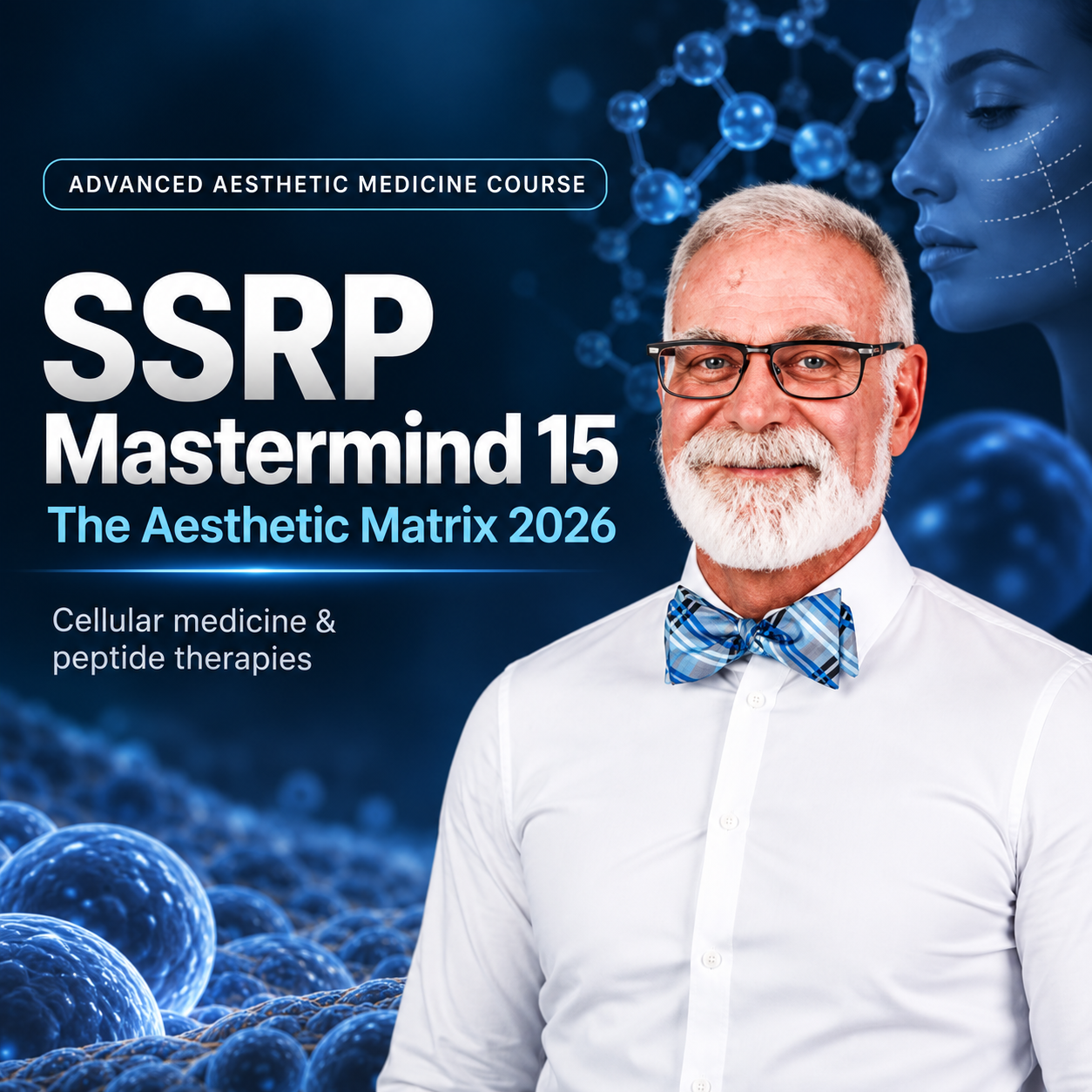
SSRP Mastermind 15 The Aesthetic Matrix 2026

€360.00
The aesthetic cellular medicine course explains how light, inflammation and epigenetics drive skin ageing, then applies that science to peptides, platelet concentrates, exosomes and structured EDIT consultations.
- Photoageing, visible light, epigenetics & matrix remodelling
- Peptide signalling, PRP vs PRF & exosome limitations
- 10 lessons, VTT subtitles & 10 PDF learning guides
- Instant access · unlimited access in time

Connect skin biology to every aesthetic treatment decision you make
The aesthetic cellular medicine course from Seeds Scientific Research & Performance traces photoageing, visible-light pigmentation theories, epigenetic change and extracellular matrix repair, then carries that biology into peptide signalling, PRP versus PRF choices, the measurement problems around exosomes and a four-step EDIT consultation model for individualised plans.
-
10video lessons
-
20+ hlisted teaching
-
10PDF learning guides
-
Unlimitedcourse access
The programme
Why skin ages: light, stress & inflammation
Lessons open with the ultraviolet spectrum, separating the roles attributed to UVA and UVB, and then weigh the hypotheses linking blue and visible light to pigment and dermal change. Oxidative stress and chronic inflammation are framed as the shared pathway behind these exposures.
Epigenetics & matrix remodelling
Gene-regulation concepts are used to explain slow, cumulative skin change rather than isolated wrinkles. The teaching then follows collagen turnover, barrier biology and tissue repair so that later treatment choices rest on a clear model of the extracellular matrix.
Peptides & signalling in the aesthetic cellular medicine course
Peptide therapies and cell-signalling strategies are examined for collagen stimulation, barrier support and control of local inflammation. Speakers also link systemic metabolic health and nutrition to what clinicians observe on the face and scalp.
Biologics: PRP, PRF & exosomes
Platelet concentrates are compared as practical decision points, with attention to preparation and expected tissue response. Exosome products receive a frank look at delivery routes and the difficulty of measuring what a vial actually contains.
Consultation planning with the EDIT model
Evaluate, Discuss, Identify and Tailor give the consultation a repeatable structure. The framework helps explain why two patients answer differently to one protocol and supports longitudinal follow-up instead of single-session thinking.
Who it’s for
- Aesthetic medicine practitioners ground anti-ageing protocols in cell and matrix biology
- Dermatologists revisit photoageing, pigmentation and barrier science with a treatment lens
- Plastic surgeons weigh regenerative adjuncts such as platelet concentrates and peptides
- Clinicians in biologics-adjacent care gain a translational view of skin and scalp physiology
The consult
Is this a hands-on injection course?
No — it is a lecture-based programme focused on mechanisms and clinical reasoning. Procedures are discussed as decision points rather than filmed step by step on patients.
Are all the therapies discussed approved everywhere?
No. Several peptides and biologic products, exosomes in particular, are investigational or loosely regulated in many countries, so the content should be read as education and applied within your local rules.
What comes with the videos?
Each of the ten lessons is paired with a VTT subtitle file and a downloadable PDF learning guide, which makes revisiting key slides straightforward.
Why does the title say 2026 when the sessions are dated 2025?
The product carries a 2026 label, while the Mastermind sessions themselves are dated 2025; the lesson content is the same Aesthetic Matrix programme.
How soon can I start watching?
Your lessons unlock as soon as payment clears, and you keep them with no expiry date.
Do I get CME credit or a certificate?
No. Derma Academy provides the course files only — no CME or CE credits, MOC points or certificates of completion are included.
The spec label
| Format | Video lessons with VTT subtitles and PDF guides |
|---|---|
| Listed duration | More than 20 hours across 10 lessons |
| Producer | Seeds Scientific Research & Performance (SSRP) |
| Level | Advanced, mechanism-focused aesthetic and regenerative medicine |
| Topics | Photoageing · epigenetics · peptides · PRP · PRF · exosomes · EDIT |
| Training models | Recorded lectures · slide-based teaching |
| Discipline | Aesthetic Medicine · Regenerative Aesthetics |
| Delivery | Instant access · unlimited access in time |
Related products
Aesthetic Medicine


Aesthetic Medicine
Aesthetic Medicine