Masterclass in Asian Double Eyelid Design and Crease Formation, Third Iteration
Original price was: €210.00.€60.99Current price is: €60.99.
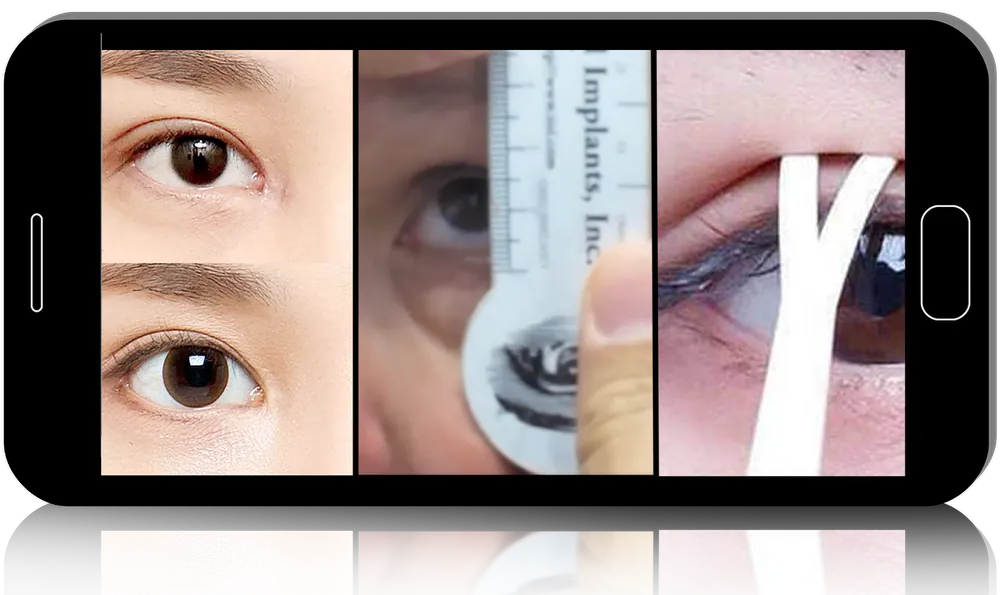
The Asian blepharoplasty course combines William P.D. Chen’s third-edition PDF book with 68 narrated clips on planning, creating and revising the upper eyelid crease in East Asian patients.
- Eighteen primary cases with tapered, parallel & ptosis-combined designs
- Twelve revision operations for uneven, high or failed folds
- Step-by-step dissection, fat management, levator fixation & companion PDF
- Instant access · unlimited access in time

A short look inside — full masterclass unlocked at checkout.
Design natural double eyelid creases in primary and revision Asian patients
The Asian blepharoplasty course pairs William P.D. Chen’s revised book with dozens of narrated clips covering crease height and shape planning, orbicularis and septal dissection, preaponeurotic fat management, lamellar realignment and skin-to-levator fixation, plus revision cases for asymmetric, high or failed folds in women and men of different ages.
-
6video modules
-
68short video lessons
-
5hlisted footage
-
1companion PDF book
The programme
Primary crease creation across patient profiles
Eighteen primary cases range from a 22-year-old after years of eyelid tape to a 62-year-old with established upper-lid findings. Requests for medially tapered versus parallel folds, male patients and a combined ptosis repair show how design adapts to anatomy and preference.
Revision surgery in the Asian blepharoplasty course
Twelve secondary operations address unsatisfactory earlier results, including uneven creases, a 19-year-old unhappy with her first surgery and older patients needing correction. They demonstrate how scarred planes are re-entered and a new fold height is re-established.
The operation broken into single steps
A ten-part sequence isolates each manoeuvre: marking and incision, orbicularis dissection, cautery, septal opening, fat release and repositioning, skin-muscle excision and final crease fixation to the levator aponeurosis. Two further step-by-step sets revisit the same workflow with bevelled-incision variations.
Mechanics, models & technical extras
Short demonstrations explain how a raised crease alters levator excursion, using a paper model to illustrate abnormally high fixation. Microscope-assisted removal of buried sutures and focused fat-handling clips add practical troubleshooting material.
Companion book with updated chapters
The PDF edition of the textbook accompanies the videos, with eight new chapters and redrawn colour illustrations. It provides the anatomical and conceptual background that the brief surgical clips assume.
Who it’s for
- Oculoplastic surgeons refine crease design and fixation for East Asian upper eyelids
- Facial plastic surgeons add a structured approach to primary and secondary double eyelid surgery
- Plastic surgeons with Asian patients study revision strategies for asymmetric or failed folds
- Cosmetic dermatologic surgeons understand eyelid anatomy before referring or operating
The consult
Why are many of the videos so short?
The material is built as clips that accompany the book, so several step sequences last only seconds to a few minutes each — one module of thirteen steps totals about two minutes. Expect focused snippets rather than continuous operations.
Do I get the book as well as the videos?
Yes — a PDF of the third-edition text is included alongside the six video modules.
Is every clip about eyelid surgery?
Almost all of them. One supplementary video shows medial rectus pulley fixation during strabismus surgery in a child, included for anatomical comparison rather than as a blepharoplasty technique.
Is this enough to start performing double eyelid surgery?
It is a strong visual and reading reference, but it does not replace supervised oculoplastic training or hands-on experience with this anatomy.
When will the videos and PDF be available?
Both unlock the moment your order is paid and remain yours to revisit without any time limit.
Do I get CME credit or a certificate?
No. Derma Academy provides the course files only — no CME or CE credits, MOC points or certificates of completion are included.
The spec label
| Format | Narrated video clips in 6 modules + PDF book |
|---|---|
| Listed duration | About 5 hours of footage across 68 clips |
| Faculty | William P.D. Chen |
| Level | Intermediate to advanced oculoplastic surgery |
| Techniques | Crease design · septal opening · fat repositioning · levator fixation · revision |
| Training models | Primary & revision patient cases · step clips · paper model |
| Discipline | Plastic Surgery · Eyelid Surgery |
| Delivery | Instant access · unlimited access in time |
| Author | William P.D. Chen |
|---|
Related products
Plastic Surgery
Aesthetic Medicine