From Lab to Practice: A Surgical Guide to Hair Transplantation

Original price was: €450.00.€60.99Current price is: €60.99.
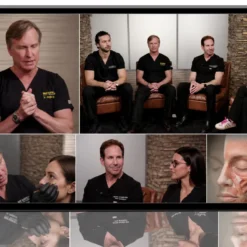
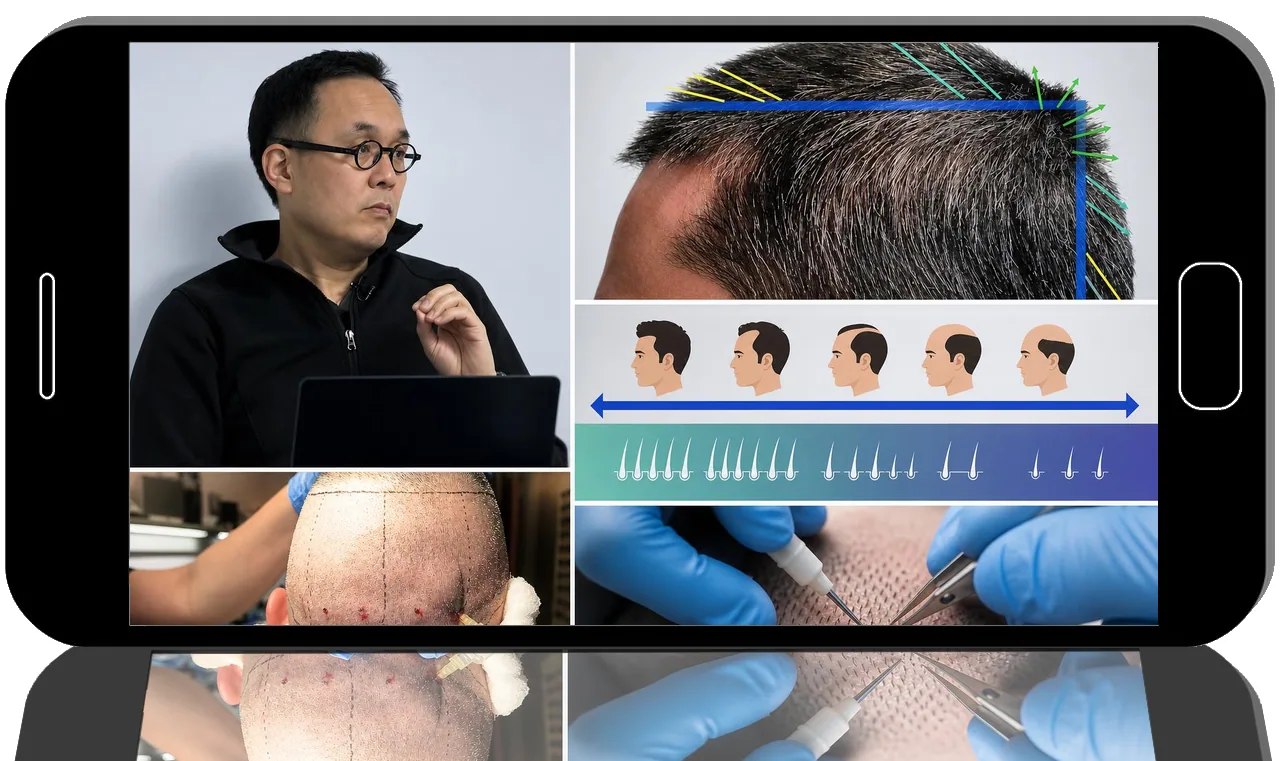
The hair transplant cadaver course records Samuel M. Lam teaching donor planning, strip harvesting and recipient design over two days of lectures, lab work and live surgery.
- Candidate selection, safe donor zone & miniaturization assessment
- Strip excision, tumescence, transection control & trichophytic closure
- Scar strategy, FUE decisions, crown & female-pattern design
- Instant access · unlimited access in time

A short look inside — full masterclass unlocked at checkout.
Plan donor harvest and recipient design like a hair restoration surgeon
The hair transplant cadaver course captures Samuel M. Lam’s two filmed teaching days — lectures, cadaver-lab sessions and live operative footage — on candidate selection, safe donor mapping, tumescent anaesthesia, linear strip excision versus FUE, trichophytic closure, scar strategy and recipient planning for crowns and female-pattern loss.
-
2teaching days
-
7video lessons
-
8h 40mlisted teaching
-
Unlimitedcourse access
The programme
Candidate selection and donor mapping
Lam explains how to identify suitable patients, define the safe donor zone and use bony landmarks and scalp laxity to set incision limits. Diffuse donor disease and miniaturization are flagged early as reasons to change or abandon a plan.
Strip excision technique in the hair transplant cadaver course
Strip height and width, dermal scoring and blade control are taught with the aim of limiting transection of grafts and neurovascular structures. A visual method for spotting and correcting cutting angle helps during harvest.
Anaesthesia, tumescence and closure
Tumescent infiltration is presented as both a comfort measure and a way to protect deeper structures. Trichophytic closure and tension control are then covered to keep the donor scar as discreet as possible.
Previously operated scalps and scar decisions
Non-virgin donors raise choices between reusing a scar, adding another strip, switching to FUE or grafting into scars instead of revising them. Lam also warns about FUE in compromised crowns and stresses lifetime donor budgeting.
Crown, whorl and female-pattern design
Recipient planning moves from basic algorithms to more creative density distribution and whorl placement. Ethical case selection runs through the discussion, alongside cadaver-lab and operating-room demonstrations of the concepts.
Who it’s for
- Surgeons entering hair restoration learn the full strip and donor workflow from planning to closure
- Practising hair transplant surgeons refine scar management, transection control and crown design
- Facial plastic and aesthetic surgeons add a structured approach to female and male pattern loss
The consult
Is the emphasis on strip or FUE?
Linear strip excision receives the most detailed teaching. FUE is discussed mainly as a decision — when to favour it, and when it is risky — rather than as a step-by-step punch tutorial.
How are the seven lessons organised?
They are grouped into two modules, one per teaching day, of 4h 40m and 4h. Individual lesson titles are not broken out, and both day summaries revisit similar strip, scar and crown topics, so some repetition is likely.
What kind of footage is included?
Recorded lectures, cadaver-lab teaching and live surgery with running explanation. It is an educational record of an in-person course and does not replace hands-on supervised practice.
Is graft placement covered as well as harvesting?
Recipient design for the crown and female pattern is discussed, including density and whorl positioning. Detailed implanter or forceps placement steps are not itemised in the module summaries.
When can I watch it?
Straight after purchase, with the recordings remaining open to you permanently.
Do I get CME credit or a certificate?
No. Derma Academy provides the course files only — no CME or CE credits, MOC points or certificates of completion are included.
The spec label
| Format | Online video course — 2 modules, 7 lessons |
|---|---|
| Listed duration | 8 hours 40 minutes |
| Faculty | Samuel M. Lam |
| Level | Beginner to established hair restoration surgeons |
| Techniques | Strip excision · FUE decisions · tumescence · trichophytic closure · recipient design |
| Training models | Lectures · cadaver lab · live surgery |
| Discipline | Aesthetic Medicine · Hair transplantation |
| Delivery | Instant access · unlimited access in time |
| Author | Samuel M. Lam |
|---|
Related products
Aesthetic Medicine

Aesthetic Medicine
Aesthetic Medicine