Advanced Techniques in First‑ and Second‑Stage Breast Lift Surgery 2021
Original price was: €710.00.€60.99Current price is: €60.99.
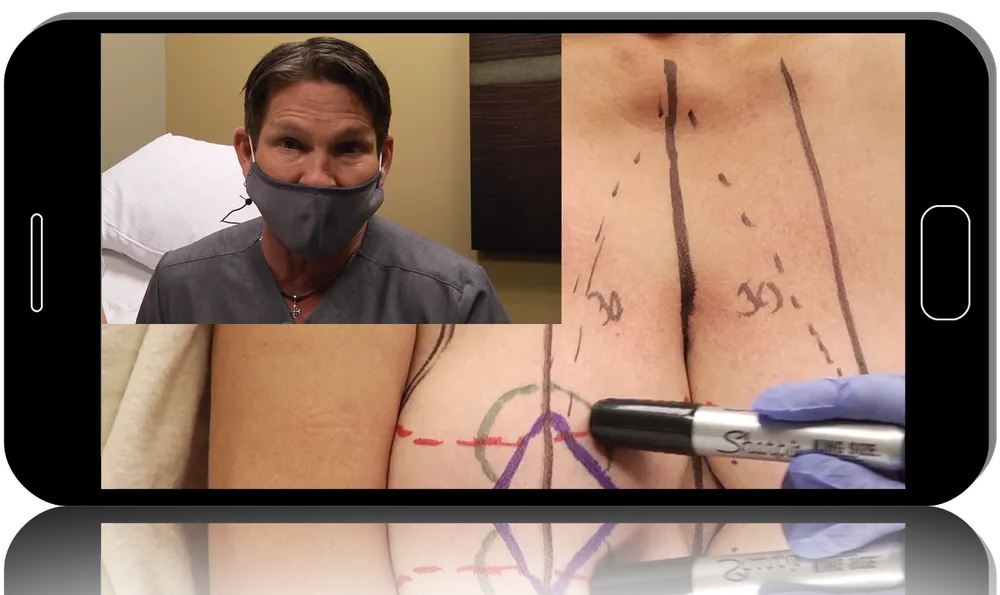
The Calobrace mastopexy video course follows Bradley Calobrace through five primary and secondary breast lifts, explaining markings, implant decisions and the support techniques he relies on for lasting shape.
- Central pedicle reduction & augmentation mastopexy with mesh
- Saline-to-silicone exchange & lower pole autoaugmentation
- Explantation, total capsulectomy & post-implant reshaping
- Instant access · unlimited access in time

A short look inside — full masterclass unlocked at checkout.
Plan durable breast lifts in primary, revision and explant patients
The Calobrace mastopexy video course works through five narrated cases — a central pedicle reduction with mesh support, a secondary lift with saline-to-silicone implant exchange, lower pole transposition autoaugmentation, augmentation mastopexy with mesh reinforcement and explantation with total capsulectomy — focusing on markings, implant choice and long-term shape.
-
5complete cases
-
7h 11mlisted teaching
-
1expert surgeon
-
Unlimitedcourse access
The programme
Central pedicle reduction with internal support
A 67-year-old patient with large, ptotic breasts wishing to go from 40DD to a C cup opens the series. Markings and procedure selection are reviewed before a central pedicle reduction reinforced with soft-tissue support to stabilise the medial breast.
Revision lift with implant exchange
The second case is a remove-and-replace operation in a patient with prior augmentation and possibly an earlier lift. Calobrace explains why a higher-profile cohesive silicone device replaces the saline implants to gain shape control and projection.
Autoaugmentation in the Calobrace mastopexy video course
Lower pole tissue is transposed upward to build upper pole fullness without an implant in a 40-year-old after one pregnancy. Sternal notch-to-nipple measurements and planned nipple elevation are explained alongside parenchymal reshaping.
Augmentation mastopexy for bottom-heavy breasts
A 37-year-old after two pregnancies wants to move from a C to a full D or larger. The lesson shows why lower pole excess must be reduced, rather than simply adding a large implant, to limit pseudoptosis and recurrent sagging.
Explantation & total capsulectomy
The longest case addresses a patient whose systemic complaints progressed after saline augmentation. It covers whether to remove the entire capsule, how to restore shape after implant removal and how a lift-based reconstruction supports comfort and form.
Who it’s for
- Plastic surgeons compare pedicle choices and support strategies across five breast presentations
- Breast revision surgeons study implant exchange, explantation and capsulectomy decisions
- Surgeons offering implant-free options see autoaugmentation planned and measured in detail
- Senior trainees learn how markings translate into stable long-term breast shape
The consult
Is mesh used in these operations?
Yes. Two of the five cases add internal support — the central pedicle reduction and the primary augmentation mastopexy — and the course explains what that reinforcement is meant to achieve.
Does it cover breast implant removal?
The final case, about two hours long, is dedicated to explantation, the total versus partial capsulectomy decision and reshaping the breast afterwards.
Do I need this if I already own Advanced Initial & Revision Mastopexy?
No. That product presents the same five Calobrace cases with matching running times, and Spanish and Portuguese editions also exist, so a single purchase is enough.
Is it suitable for early-career surgeons?
It is aimed at practising plastic surgeons. The videos support decision-making but are no substitute for supervised operative experience.
How do I get the videos?
Your five cases become available instantly once the order is paid, and you may rewatch them for as long as you like.
Do I get CME credit or a certificate?
No. Derma Academy provides the course files only — no CME or CE credits, MOC points or certificates of completion are included.
The spec label
| Format | Narrated surgical video series — 5 cases |
|---|---|
| Listed duration | 7 hours 11 minutes |
| Faculty | Bradley Calobrace |
| Level | Advanced aesthetic breast surgery |
| Techniques | Central pedicle · implant exchange · autoaugmentation · mesh support · capsulectomy |
| Training models | Recorded patient operations with preoperative markings |
| Discipline | Plastic Surgery · Mastopexy |
| Delivery | Instant access · unlimited access in time |
| Author | Bradley Calobrace |
|---|
Related products
Facial Rejuvenation
Niamtu Platinum Deluxe Full Series Compilation — Complete Facial Aesthetic Surgery Mastery
Academies / Programs